Skip to main content
Praktisch
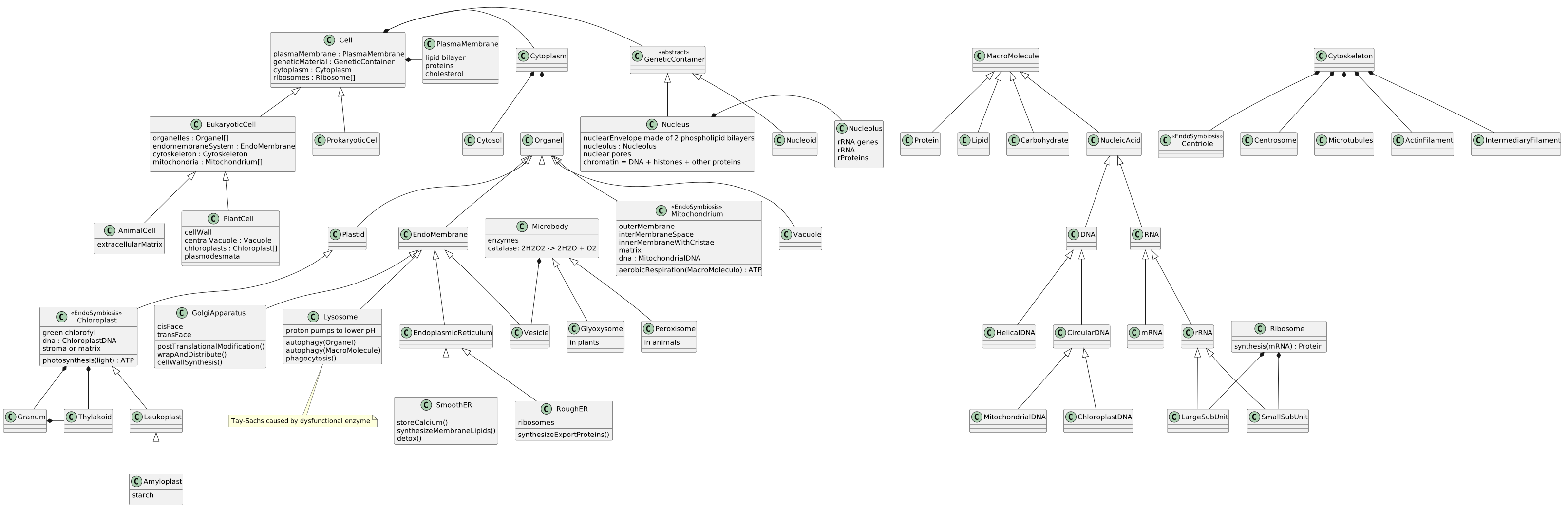
1 De cel (H4)
- celtheorie
- organismen = 1 of meer cellen
- cell = kleinste levende eenheid
- cellen ontstaan door deling
- microscopen
- licht: ~200nm
- electron: ~0.2nm
- studie van prokaryoten = microbiologie
- studie van eukaryoten = celbiologie
- cel interacties
- tight junction
- adhesive junction
- communicating junction with connexons
2 Celdeling (H10-11)
- bacteria
- celdeling: binaire splijting
- = clonale reproductie
- != mitose
- cirkelvormig DNA replicatie
- septum
- eukaryoten
- chromosomen
- mens: 22 paar + 1 paar geslachtschromosomen (XX of XY)
- uitz.: monosomie, trisomie
- paar = homologe chromosomen = homologen
- chromatine
- heterochromatine
- euchromatine: expressed
- karyotype: visualisatie per individu (voor replicatie)
- zusterchromatiden: 2 replica's van 1 chromosoom
- verbonden met kinetochoren + cohesine t.h.v. centromeer
- celcyclus
- G0: rustfase
- interfase
- G1: gap fase 1
- S: synthese
- G2: gap fase 2
- chromosomen condenseren
- organellen repliceren
- centriolen repliceren en naar twee celpolen
- M: mitose
- profase
- chromosomen condenseren
- centriolen repliceren en naar twee celpolen
- spoelfiguur
- nucleaire enveloppe lost op
- (prometafase)
- chromosomen aan spoelfiguur
- microtubuli: verbinding celpolen-kinetochoren
- metafase
- chromosomen in celcentrum (=metafase plaat)
- anafase
- afbraak cohesine: splitsing zusterchromatiden
- A: chromosomen naar polen
- B: polen verder uit elkaar
- telofase
- spoelfiguur verdwijnt
- nieuwe nucleaire envelop + nucleolus
- chromosomen ontvouwen
- C: cytokinese
- splitsing van cel
- dieren: contractiele klievingsring
- planten: membraan vormt celplaat tussen kernen
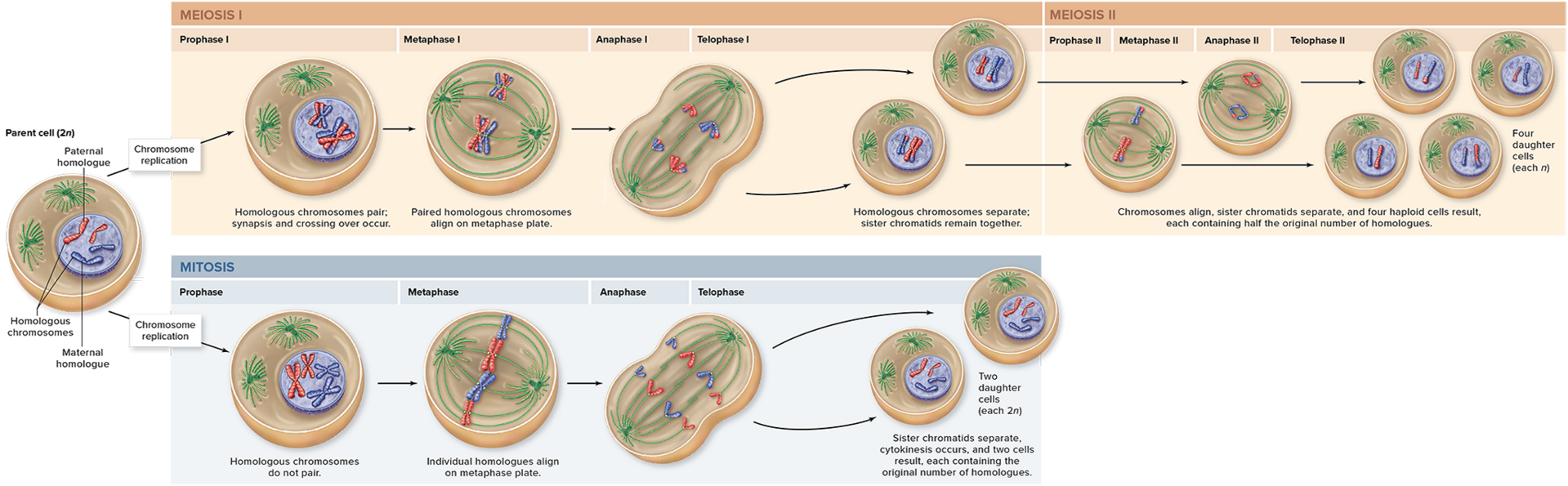
- meiose
- productie 4 haploide (n) gameten uit 1 diploide (2n) cel
- alle somatische cellen: diploide
- seksuele reproductie: 2 haploide gameten -> 1 diploide zygote
- meiose I
- replicatie + deling
- 2n -> n
- profase I
- synaps: associatie van homologenpaar
- synaptonemaal complex
- crossing-over: recombinatie tussen niet-zusterchromatiden
- t.h.v. chiasmata
- tussen zusterchromatiden heeft geen zin want replica's
- metafase I
- willekeurige alignering homologen = "independent assortment"
- anafase I
- splitsing homologen ipv zusterchromatiden
- telofase I: idem
- meiose II
- geen replicatie + wel deling
- n -> n
- cf. mitose
3 Levensboom (H25)
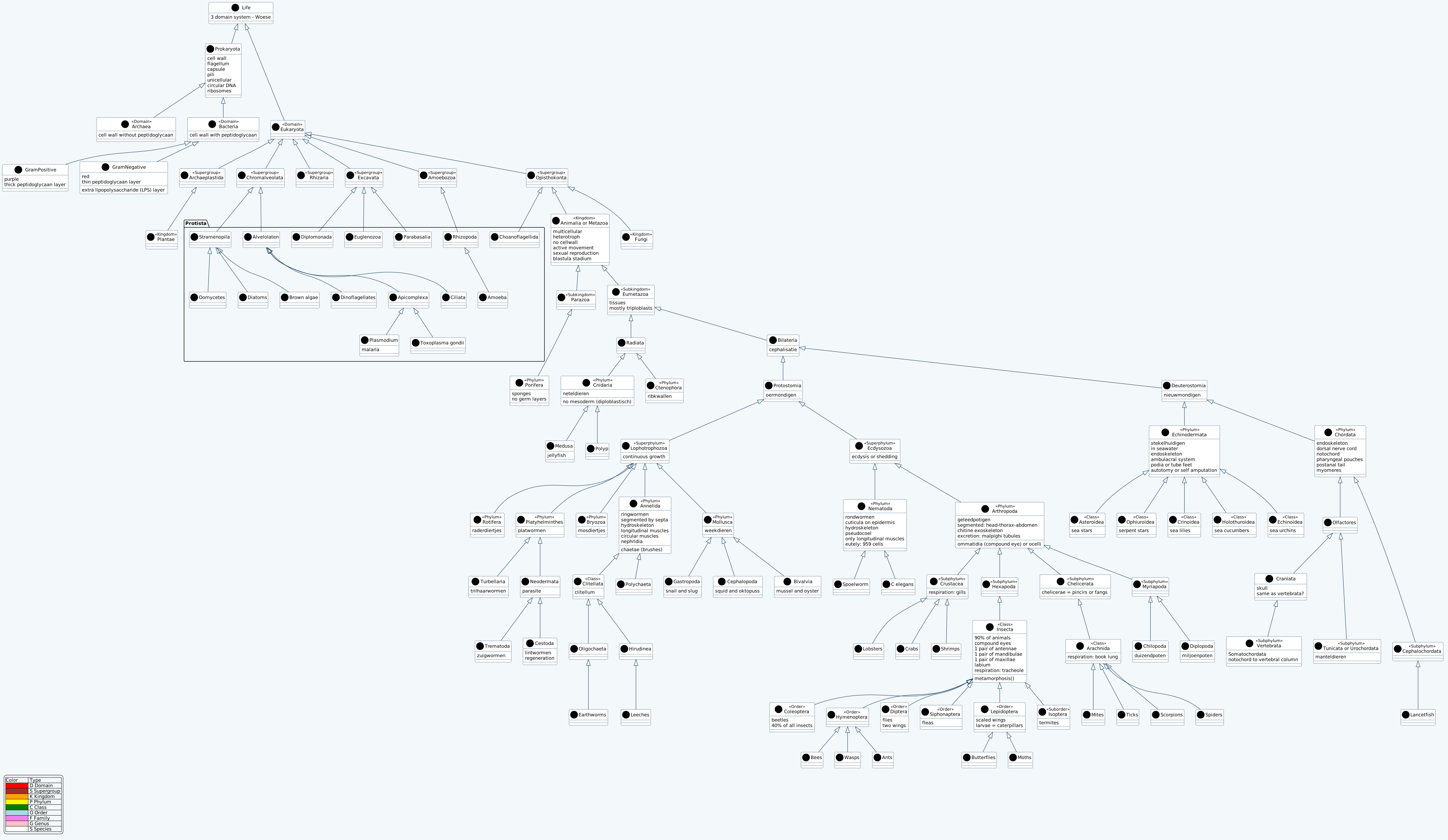
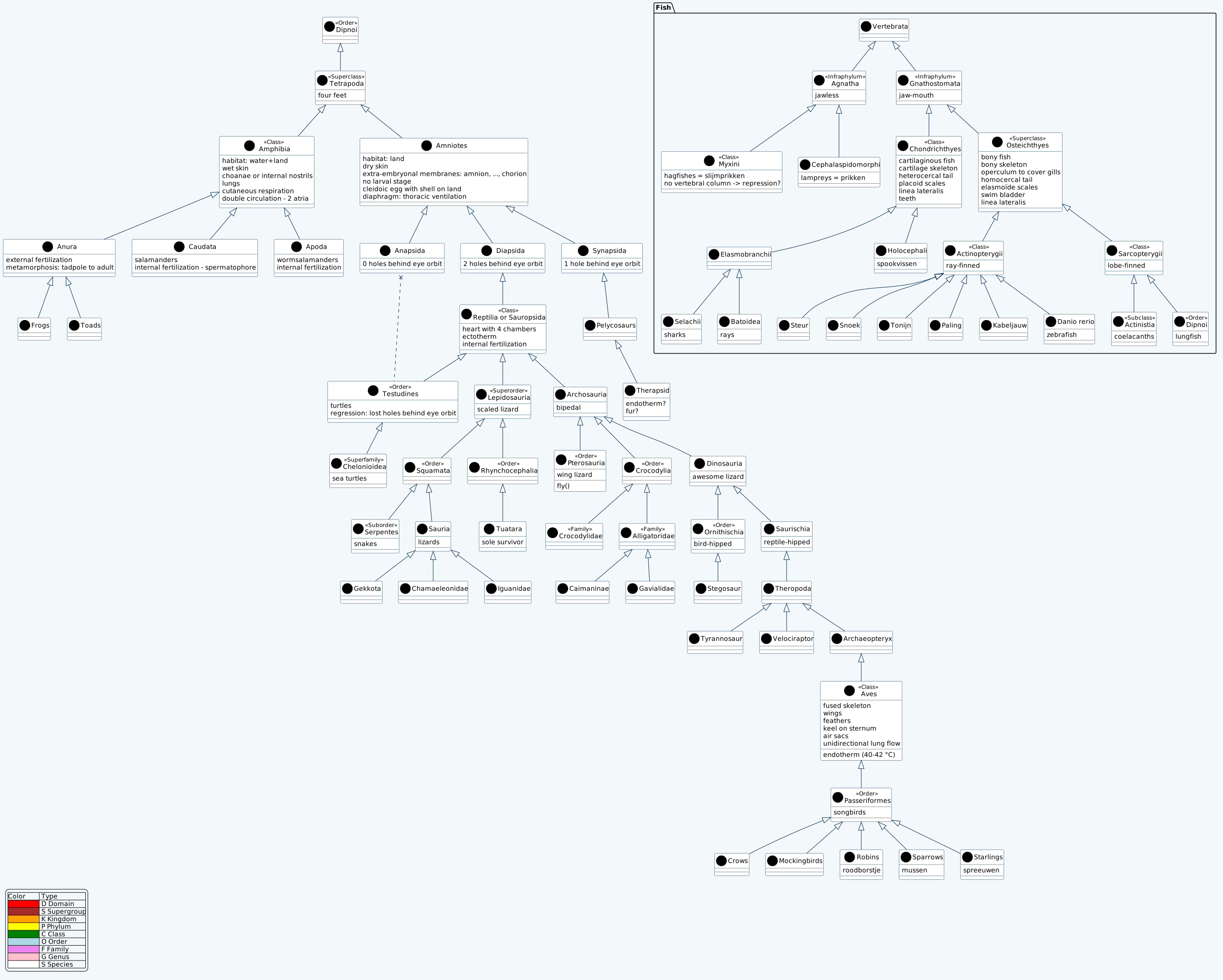
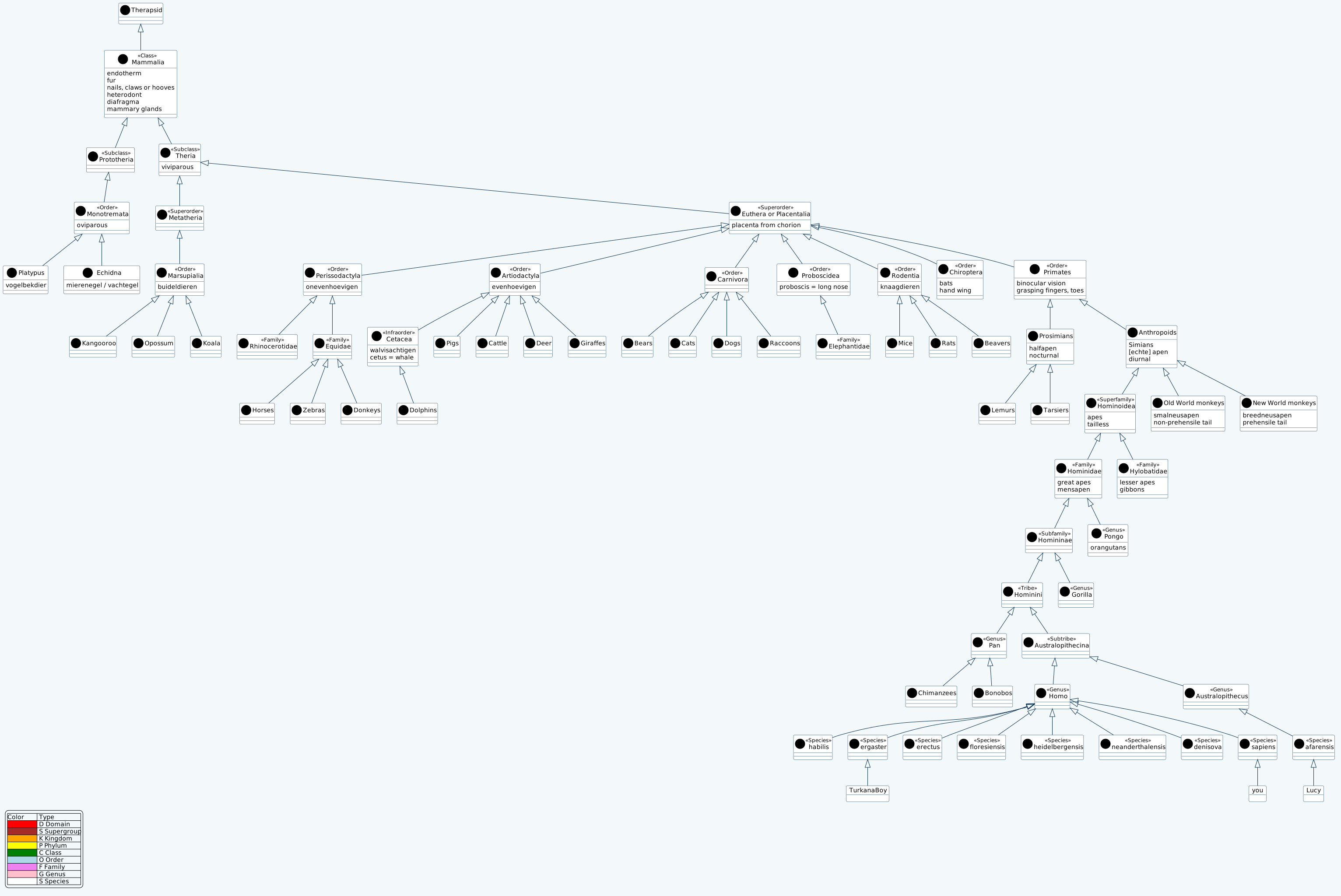
- 3 domeinen fylogenie
- taxonomie Linnaeus (1750)
- taxa
- domein
- rijk/kingdom/regnum
- phylum
- klasse/classis
- orde/ordo
- familie/familia
- geslacht/genus
- soort/species
- binomiale naam: Genus + species
- bv. Homo sapiens of H. sapiens
- eigenschappen levende organismen
- organisatie
- gevoelig voor stimuli
- groei / metabolisme
- ontwikkeling
- reproductie
- regulatie
- homeostase
- erfelijkheid
4 Virussen (H26)
- geen organismen
- hebben cel nodig voor reproductie
- daarbuiten: inert virion
- weefseltropisme: specialisatie (levercel, neuron,...)
- structuur
- nucleinezuurkern
- capsid
- enveloppe (optioneel)
- vorm
- helicaal
- icosahedraal
- complex
- polymorf: geen symmetrie (bv door enveloppe)
- genoom
- RNA (70%)
- deel in cytoplasma
- geen transcriptie nodig
- eventueel reverse transcriptie: RNA -> DNA
- positive strand vs negative strand (complement codeert voor eiwitten)
- DNA
- DNA -> mRNA in kern eukaryoot
- eerst eigen DNA
- daarna capsid proteines

- (bacterio)fagen
- virussen die bacteria infecteren
- 2 cycli
- lytische cyclus: doodt gastheer
- adsorptie
- penetratie
- -> lysogeen?
- synthese
- assemblage
- vrijzetting
- lysogene cyclus:
- lysogenie: integratie van viraal genoom
- inductie: lysogeen -> lytisch
- ziekteverloop
- acuut
- chronisch
- latent
- traag
- ziektes
- DNA virussen
- (water)pokken
- herpes
- hepatitis B
- RNA virussen
- polio
- hepatitis A
- verkoudheid (rhinovirus)
- AIDS
- HIV
- viraal gp120 glycoprotein
- hecht aan CD4 receptor van CD4+ cellen (vooral T-helper)
- tegelijk ook aan CCR5 co-receptor, later CXCR4
- gele koorts
- influenza
- types
- A
- spikes
- H: hemagglutinine bij penetratie (13 subtypes)
- N: neuraminidase bij vrijzetting (9 subtypes)
- bv. A (H5N1) vogelgriep
- B
- C
- rabies=hondsdolheid
- ebola
- oncovirussen: 15% van alle kankers
- DNA/RNA? virussen
- SARS: severe acute respiratory syndrome
- prions
- proteinaceous infectious particles
- misvouwen
- doet ook buren misvouwen (=infectie)
- veroorzaken TSE = transmissible spongiform encephalopathies
- dolle koeien
- Creutzfeld-Jacob
- scrapie (schapen)
- kuru
- viroids
- != virion
- circulair RNA
- ziekte in planten
5 Prokaryoten (H27)
- extremofielen
- prokaryoten vs eukaryoten
- unicellulair
- kleiner
- nucleoid met circulair DNA
- celdeling: binaire splijting
- geen endomembrainair systeem
- wel ribosomen
- != eukaryote ribosomen
- target voor antibiotica
- flagella
- metabolisme
- fotosynthese
- zuurstof
- niet-zuurstof: zwavel, sulfaat
- chemolithotroof
- splits anorganisch -> energie -> synthese carbohydraten
- bacteria vs archaea
- plasmamembraan
- link tussen glycerol en lipiden
- A: etherbinding
- B: esterbinding
- A: vertakkingen in lipiden
- layers
- A: soms monolayer ahv tetraethers
- B: altijd bilayer
- celwand
- A: geen of pseudo-peptidoglycan=pseudomurein
- B: peptidoglycan (PG)
- transcriptie/translatie
- A: lijkt op mechanisme eukaryoten
- celwand
- rond plasmamembraan
- meerdere lagen
- beschermt tegen hypotone omgeving (niet hypertone)
- Gram kleuring o.b.v. hoeveelheid PG
- veel/dik: gram positief (paars)
- penicilline werkt in op PG
- weinig/dun: gram negatief (rood)
- hebben extra buitenste membraan
- lipopolysacchariden (LPS)
- antibiotica resistentie
- S laag
- A: bijna altijd
- B: optioneel
- buitenste laag
- adhesie, bescherming
- capsule
- extra gelatineuze laag
- adhesie, bescherming
- bepaalt vorm
- staaf: bacillus
- rond: coccus
- helicaal: spirillum
- genetica
- plasmiden
- onafhankelijk vermenigvuldigend DNA
- klein
- niet essentieel
- horizontale gentransfer?
- 1 endospoor
- bij stress
- cytosol + DNA
- kan lang inactief overleven, dan opnieuw delen
- horizontale gentransfer
- 3 opties
- transformatie
- DNA fragmenten van dode cel -> in DNA andere cel
- transductie
- overdracht tussen cellen door faag (virus)
- types
- algemeen
- bij lytische fagen
- alle genen
- gespecialiseerd
- bij lysogene fagen
- enkele genen
- conjugatie
- via conjugatief (F) plasmide
- door holle pius = conjugatiebrug
- recombinatie plasmide + gastheer DNA
- Hfr cel: hoge frequentie recombinatie
- metabolisme
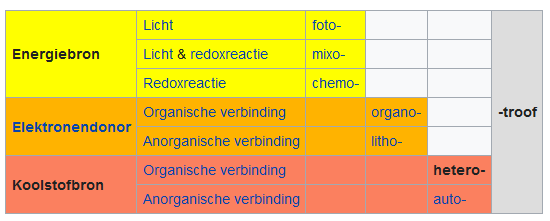
- koolstofbron
- autotroof: anorganische (e.g. CO2)
- heterotroof: organische (e.g. glucose)
- energiebron
- fototroof: licht
- chemotroof: redoxreactie
- combinaties
- foto-autotroof: fotosynthese CO2 -> C + O2 + energie
- foto-heterotroof
- chemolithoautotroof: NH3 of NO2 -> NO3
- chemoheterotroof
- saprotroof: dode organismen
- ook vaak in fungi
- zuurstof nodig?
- dieet
- herbivoren eten autotrofen
- carnivoren eten andere heterotrofen
- detrivoren eten decomposerende organismen
- pathogenen
- TBC
- tandbederf
- maagzweer: Heliobacter pylori
- chlamydia
- toxines
- exotoxines
- endotoxines: onderdeel celwand gram negatief
- varia
- anthrax
- cholera
- gonorrhea
- lyme
- ...
- symbiose
- mutualisme: win-win
- commensalisme: win-neutral
- parasitisme: win-lose
6 Protista (H28)
- alle eukaryoten behalve planten, fungi en dieren
- niet monophyletisch
- verdeeld over alle 6 supergroepen binnen eukaryoten
7 Bouwplan dieren (H32)
- kiemlagen bij eumetazoa
- di(plo)blastisch
- 2 kiemlagen
- enkel Cnidaria
- tri(plo)blastisch
- 3 kiemlagen
- ectoderm
- mesoderm
- endoderm
- al de rest
- bilateralia
- lichaamsholte (=coeloom)
- acoelomata: geen
- pseudocoelomata: tussen meso- en endoderm
- coelomata
- omgeven door mesoderm
- bevat vloeistof/gas
- hebben circulair systeem
- open: in vaten en sinussen
- gesloten: enkel in vaten
- mondigen
- protostomia = oermondigen
- blastoporus -> mond
- embryo
- spirale klieving
- vaste bestemming dochtercellen
- coeloom uit mesoderm
- deuterostomia = nieuwmondigen
- blastoporus -> anus
- embryo
- radiale klieving
- identieke dochtercellen
- coeloom uit archenteron door invaginatie
- segmentatie
- meerdere keren onafhankelijk geevolueerd
8-9 Protostoma (H33)
- parthenogenese: maagdelijke voortplanting, ongeslachtelijk
9-10 Deuterostoma (H35)
- Tiktaalik: overgangsfossiel vis -> amphibia
- neotenie: adults houden kenmerken juveniles, voorouders niet
- ovipaar vs vivipaar
- ovipaar: embryo develops outside body (in egg)
- vivipaar: embryo develops inside body
- heterodont
- insectovoor
- herbivores
- ruminants = herkauwers
- lange darmen
- maag met 4 kamers
- non-ruminants
- carnivores
- korte darmen
- klein caecum
- omnivores
10 Lichaamsbouw (H41)
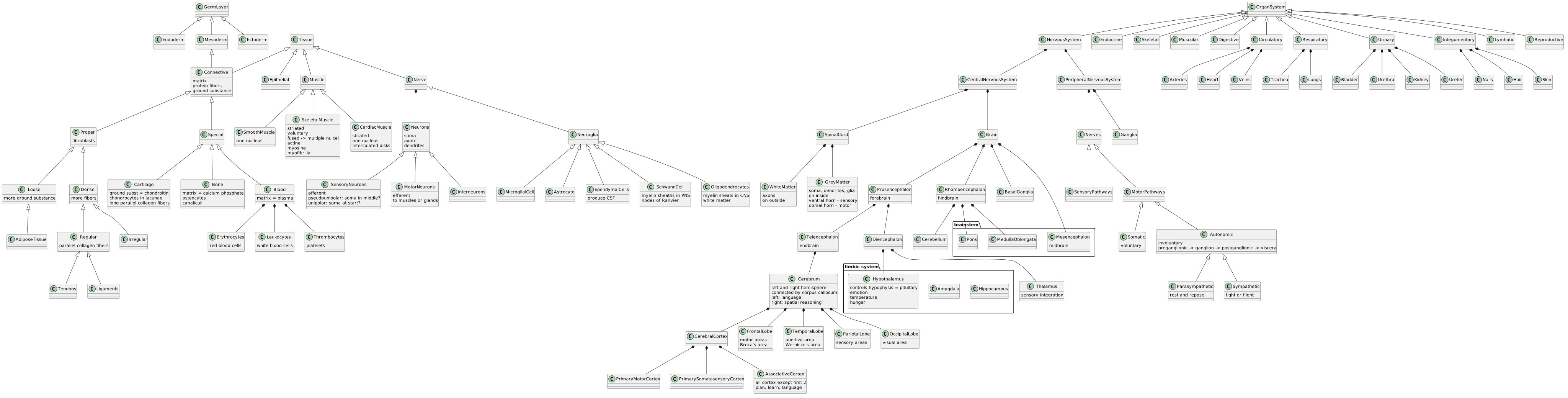
- homeostasis
- temperature in hypothalamus
16 Spijsvertering (H46)
- 4 layers
- mucosa (epitheel)
- submucosa (bindweefsel)
- muscularis x2 (spierweefsel)
- serosa (bindweefsel)
- mond
- amylase: afbraak zetmeel
- lysozyme: antibacterieel
- esophagus
- maag
- delen
- enzymen: vertering eiwitten
- dunne darm
- pancreas
- natriumcarbonaat: neutraliseert HCl
- verteringsenzymen
- peptidasen
- lipasen
- nucleasen
13 Zenuwstelsel (H42)
- types (p. 7)
- multipolar
- unipolar
- bipolar
- pseudobipolar
- action potentials
- inside -, outside +
- depolarize: more positive
- hyperpolarize: more negative
- all or nothing
- "intensity" ~ frequency, not amplitude
- phases
- (1) resting potential: -70mV
- Na-K pump
- K+ leaks out more than Na+
- macromolecule: negative
- (2) threshold reached
- voltage-gated Na+ channel
- open-closed -> open-open
- Na+ flows in
- more depolarization
- can make neighbouring region reach threshold
- (3) peak > 0mV
- voltage-gated Na+ channel
- open-open -> closed-open
- halt depolarization
- voltage-gated K+ channels
- closed -> open (delayed)
- K+ flows out
- trigger repolarization
- (4) repolarization
- undershoot: hyperpolarization
- voltage-gated Na+ channel
- closed-open -> open-closed
- voltage-gated K+ channels
- refraction period
- speed up
- increase axon diameter -> less resistance
- myelin: saltatory conduction
- synapses
- pre- and postsynaptic cell
- types
- electrical
- via gap junctions
- fast
- no regulation
- less common in vertebrates
- chemical
- AP -> voltage-gated Ca2+ channels open
- Ca2+ influx
- exocytosis of neurotransmitters (NT) in vesicles
- Acetylcholine (ACh)
- neuromuscular junctions
- depolarize -> contraction
- parasympathetic NS
- breakdown via AChE -> relaxation
- amino acids
- glutamate: excite (EPSP)
- glycine: inhibit (IPSP)
- gamma-aminobutyric acid (GABA): inhibit
- biogene amines
- epinephrine: fight or flight
- norepinephrine: fight or flight
- dopamine
- serotonin
- selective serotonin reuptake inhibitors (SSRI): antidepressiva
- neuropeptides
- NO: relax smooth muscle
- release in synaptic cleft
- bind to receptors in post-synaptic cell
- stop
- by disabling enzymes
- by reuptake of NT
- by diffusion of NT
- ...
- more common in vertebrates
- synaptic integration in soma
- cancellation
- temporal summation
- spatial summation
- habituation
- causes drug addiction (e.g., cocaine, nicotine)
- reflexes
- monosynaptic: no interneuron
- via interneuron
?? Zintuigen (H43)
- receptoren
- exteroceptoren
- vision, hearing, tasting, movement
- interoceptoren
- temperature, pressure, pain
- cutane
- mechanoreceptors
- merkle cell
- meissner corpuscle
- ruffini corpuscle
- pacinian corpuscle
- proprioceptors
- spindle: muscle length, parallel
- golgi: force, series
- baroreceptors
- linea lateralis
- cilia in cupula
- many short: stereocilia
- 1 long: kinocilium
- process
- stimulation
- ion channels
- depolarize -> receptor potential -> threshold -> AP
- transduction
- transmission
- interpretation
- auditory
- 20 - 20 000Hz
- echolocation - SONAR
- buitenoor
- tympanum = trommelvlies
- middenoor
- malleus = hamer
- incus = aanbeeld
- stapes = steigbeugel
- ovaal venster
- binnenoor
- cochlea
- vestibulair kanaal (boven)
- cochleair kanaal
- orgaan Corti
- basilaire membraan
- haarcellen
- tectorieel membraan
- tympanisch kanaal (onder)
- ronde venster
- balance
- invertebrates: statocytes / statolieten
- vertebrates: 2 chambers with otolite membrane
- utriculus: horizontal
- sacculus: vertical
- 3 semicircular channels
- end: ampullae
- cilia in cupula
- visual
- well developed in
- annelida
- molluska
- arthropoda (insects)
- chordata
- eye
- sclera
- cornea
- iris
- pupil
- lens
- accomodation: ciliary muscles + ligament
- retina
- 3 layers
- outer/input: photoreceptors
- rods
- cones in fovea
- pigment: photopsine
- blue
- green
- red
- middle
- bipolar cells
- amacrine cells
- horizontal cells
- inner/output
- from optic nerve
- to lateral geniculate nucleus in thalamus
- to occipital lobe
15 Endocrien (H44)
- klieren
- endocrien
- paracrien
- exocrien
- via kanaal naar buitenwereld
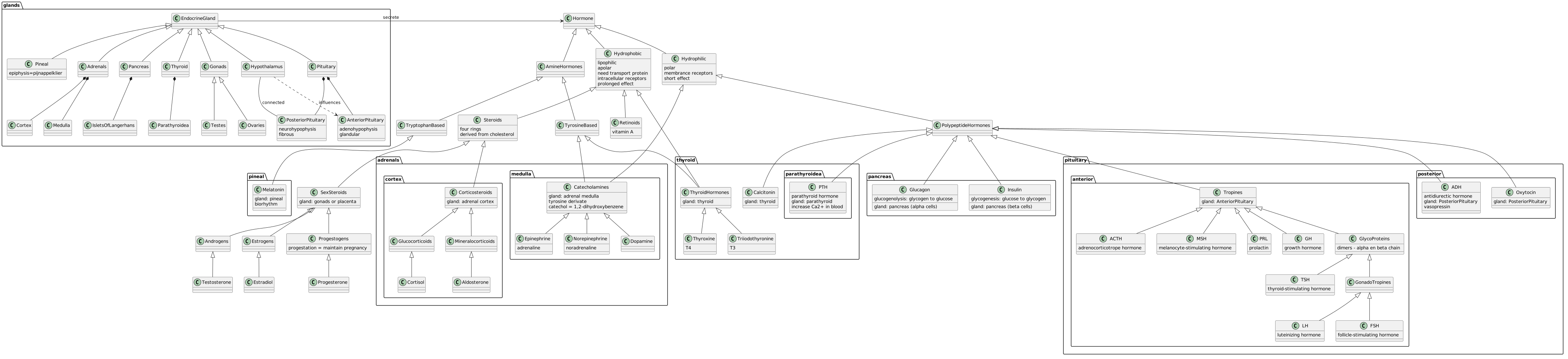
- hormonen
- 3 klassen
- polypeptiden
- ADH
- insuline
- GH
- glycoproteinen
- aminozuur-derivaten / amines
- catecholamines (tyrosine)
- schildklierhormeen (tyrosine)
- melatonine (tryptofaan)
- steroiden (lipiden, ~cholesterol)
- sex hormones
- corticosteroids (van adrenals)
- thyroxine T4
- trijoodthyronine T3
- dopamine
- noradrenaline
- adrenaline
- 2 types
- hydrofoob / apolair / lipofiel
- transport proteins
- steroide
- schildklier
- intracellulaire receptoren
- langdurige werking
- hydrofiel / polair
- rest
- receptoren op celmembraan
- secondary messengers
- korte werking (min-u)
17 Ademhaling (H47)
18 Circulatie (H48)
- plasmaproteinen
- albumine
- globiline
- fibrinogeen
- pluripotent stem cells (SC) in bone marrow
- platelets = thrombocytes
- RBC = erythrocytes
- erythropoiesis (cf. EPO)
- no nucleus
- WBC = leukocytes
- agranular
- granular
- eosinophil
- basophil
- neutrophil
- anticoagulation
- tissue plasminogen activator (tPA)
- stimulates plasminogen -> plasmine
- plasmine stimulates fibrine -> fibrinogeen
- variations in circulation system
- none
- porifera/cnidaria: via gastrovascular space
- nematoda: via digestive tract
- open (hemolymph instead of blood)
- closed
- annelida
- single circulation
- double circulation (pulmanory + systemic)
- other vertebrates
- amphibia: 3 chamber heart
- reptiles: 3 chamber heart with partial septum
- birds/mammals: a chamber heart
- humans
- heart
- AV valves
- tricuspid (right)
- bicuspid = mitral (left)
- semilunar valves
- SA node -> AV node -> bundle His -> Purkinje fibers
- ECG: PQRST
- output
- bloodpressure = output x vessel resistance
- baroreflex
- baroreceptors in aorta + carotis
- regulation by medulla oblongata
- accelerate: sympathetic -> noradrenaline
- inhibit: parasympathetic -> ACh
- vessels
- 4 layers (cf. digestive)
- endothelium
- elastic connective
- muscle
- connective
- capillaries only have endothelium layer
- vasoconstriction vs vasodilation (NO)
- lymphatic system
12 Musculo-skeletaal (H45)
- types
- hydroskelet
- internal pressure
- peristaltic movement
- exeskelet
- endoskelet
- echinodermata: made of calciet
- vertebrates: made of cartilage and/or bone (calcium phosphate)
- axial
- skull
- vertebral column
- 7 cervical (C)
- 12 throcic (T)
- 5 lumbar (L)
- sacral (S) -> sacrum
- ribs
- sternum
- appendicular
- pectoral girdle + forelegs
- pelvic girdle + hindlegs
- bone
- intramembranair (simple, e.g. skull)
- PMCs -> osteoblasts -> osteocytes (in lacunae)
- secrete enzymes
- calcify collagen
- communication via canaliculi
- osteoclasts: breakdown
- endochondral/vascular (complex, most other bones)
- start: cartilage
- add beenkraag (later periosteum)
- calcification
- slowly replace cartilage with bone
- structure
- lengthwise
- proximal epiphysis
- metaphysis with epiphyseal plate
- diaphysis (shaft)
- metaphysis with epiphyseal plate
- distal epiphysis
- cross-section
- periosteum = beenvlies
- compact bone: outer layer
- spongy bone in epifyses
- endosteum aroud medulla
- medulla: inner space in diaphysis
- remodeling due to external forces
- joints
- types 1
- immovable (e.g. in skull)
- slightly movable (e.g. in hip)
- cartilaginous (e.g. in vertebral column)
- freely movable with synovial fluid
- types 2
- ball and socket
- hinge
- gliding
- combination
- muscle
- connected to periosteum of bone
- agnosts / antagonists
- muscle fibers
- 4-20 myofibrils
- myofilaments
- actin (thin)
- myosin (thick)
- bands
- A: dark, both
- always stays same length = length of myosin
- H: only myosin (within A)
- I: light, only actin
- Z-line
- sacromere: between Z-lines
- unit of contraction in myofibrils
- types
- type I: slow twitch, red, aerobic, prolonged
- many capillaries + mitochondria
- type II: fast twitch, white, anaerobic, short
- contraction
- requires ATP
- triggered by ACh NT from motor neuron
- depolarizes sarcolemma (=muscle membrane)
- depolarization continues via T-tubuli
- sarcoplasmatic reticulum (SR) releases Ca2+
- Ca2+ attaches to troponine
- troponine exposes binding sites on actin fibers hidden by tropomyosin
- cross-bridges between actin and myosin can form
- myosin heads pull in actin fibers
19 Osmoregulatie (H49)
- osmotic pressure
- osmotic value = pressure vs clean water
- osmolarity = amount of osmotic active particles [mol/l]
- tonicity = effect of solution on cells
- hypertonic (water flows out -> cell shrinks)
- environment more concentrated
- cell more diluted
- cell hypotonic compared to environment
- isotonic
- hypotonic (water flows in -> cell expands)
- environment more diluted
- cell more concentrated
- cell hypertonic compared to environment
- osmoregulation
- osmoconformists: is balance with environment (isotonic)
- invertebrates
- prikken
- kraakbeenvissen
- osmoregulators: maintain constant osmolarity
- most vertebrates
- live in seawater (=marine) -> hypotonic
- reduced glomerus
- active secretion
- isotonic urine
- live in fresh water -> hypertonic
- loses metabolites to water if it doesn't act
- large glomerulus
- active (re)absorption
- diluted urine
- excretion
- of toxic ammonia (NH3)
- directly by diffusion via gills
- aquatic invertebrates
- bony fish
- larval amphibian
- by conversion to (hydrophilic) ureum
- not compatible with eggs that have a hard shell
- eggs without shell
- cartil. fish
- adult amphibia
- placenta
- by conversion to (hydrophobic) uric acid
- compatible with eggs that have a hard shell
- birds
- reptiles
- insects
- kidneys
- acoelomata (o.a. platwormen): protonefrida -> vlamcellen -> external
- coelomata (o.a. gelede wormen): nefrida -> internal+external
- filtration
- reabsorption by active transport
- insects: malpighian tubules
- secretion by active transport
- osmosis: water and K+ passivly reabsorbed
- vertebrates
- kidneys
- nephrons
- filtration in glomerulus
- reabsorption (active + passive)
- extra active secretion
- loop of henle
- only in birds and mammals
- possible to produce hypertonic urine (vs bodily fluids)
- marine birds: gland to excrete salt
- humans
- kidneys -> ureters -> bladder -> urethra
- renal cortex
- renal medulla
- controls
- blood volume (amount of water)
- blood pressure
- osmolarity (ion concentrations)
- low Na+ -> aldosterone -> increase reabsorption
- similar: renine-angiotensine-aldosterone system
- incl. vasodilation
- incl. K+ secretion
- opposite: atrial natriuretic hormone
- pH
- proximal tubulus
- reabsorption
- Na+: active
- Cl-: passive following EM gradient
- water: passive following osmotic gradient
- loops of Henle
- vasa recta: capillaries perpendicular to branches of loop
- goal: water reabsorption
- cf. tegenstroomprincipe in kieuwen van vissen
- countercurrent multiplier system
- rising branch
- impermeable to water
- active reabsorption of Na+
- falling branch
- permeable -> passive water reabsorption (osmosis)
- distal tubulus
- contains hypotonic filtrate
- more water reabsoption (osmosis)
- regulated by ADH
- affects permeability of tube
- higher ADH -> more reabsorption
20 Voortplanting (H51)
- reproduction
- asexual
- unicellular
- Cnidaria: budding = knopvorming
- regeneration (some worms)
- sexual
- meiosis
- haploid gametes
- diploid zygote
- new strategies
- parthenogenesis
- asexual
- embryo from unfertilized egg
- cyclical parthenogenesis
- switch between sexual and asexual phases
- hermafroditisme
- both gonads
- simultaneous
- switch roles
- cross-fertilization (earthworms)
- sequential (clownfish)
- switch sexes
- protogyny: first female, then become male
- protoandry: first male, then become female
- sex determination
- fish/reptilia
- mammels
- early in embrionic development
- XY -> SRY gen -> male gonad differentiation
- XX -> no SRY -> female
- fertilization
- external
- internal
- most other vertebrates
- female reproductive tract ~ sea
- development
- oviparity = eierbarend
- fertilized eggs released (external)
- ovoviviparity = eierlevendbarend
- fertilized eggs stay in mother
- feed from egg yolk
- viviparity = levendbarend
- fertilized eggs stay in mother
- placental feeding
- fish
- bony fish: external
- cartil. fish: internal, viviparous (some oviparous)
- amphibians
- external
- oviparous
- embryo - larva - adult (metamorphosis)
- reptiles
- internal
- mostly oviparous
- birds
- internal
- oviparous
- homeotherm: keep eggs warm
- mammals
- internal
- monotremata: oviparous
- marsupialia: viviparous
- placentalia: viviparous
- humans
- male
- testes
- tubuli seminiferi: produce sperm
- spermatogenesis
- spermatogonium = kiemcel
- mitosis
- primary spermatocyt
- meiosis I: diploid -> haploid
- secondary spermatocyt
- meiosis II
- spermatides
- spermatozoa
- head surrounded by acrosome for penetration
- body: many mitochondria
- flagel
- sertoli cells
- provide nutrients
- spermiogenese
- convert spermatides to spermatozoa
- remove excess cytoplasm
- Leydig cells between tubuli: produce testosteron
- epididymis = bijbal
- vas deferens = zaadleider
- combine in urethra with 3 glands
- vesiculae seminalis = zaadblaasjes: 60% sweet fluid
- prostate: 30% acid fluid
- Cowpers gland: 10% fluid
- penis
- hormones
- hypothalamus: GnRH
- adenohypophysis
- LH: stimulate Leydig cells -> testosterone
- FSH
- stimulate Sertoli cells
- more spermatogenese
- more inhibine
- testosteron + inhibine: negative feedback
- female
- ovaria
- follicle
- primary oocyt
- granulosa cells
- puberty: produce estradiol
- oogenesis
- oogonum = kiemcel
- mitosis
- primary oocyt
- meiosis I: diploid -> haploid
- stop at prophase I until puberty
- secondary oocyt + 1st polar body
- meiosis II
- stop at metaphase II until fertilization
- ootide = onrijpe eicel + 2nd polar body (3 total)
- ovum = rijpe eicel
- Fallopian tubes = oviducts
- uterus
- retroversion
- 3 layers
- perimetrium
- myometrium
- endometrium
- menstrual cycle
- ovaries = f(LH, FSH)
- follicular phase
- FSH peak before ovulation: stimulate follicles
- 1 follicle -> Graafse follikel
- estrogen: uterus in proliferation phase
- ovulation = eisprong
- estrogen: stimulate LH
- secondary oocyt erupts from Graafse follikel
- to oviduct
- luteale phase
- LH: rest Graafse follikel -> corpus luteum = gele lichaam
- corpus luteum
- secrete estrogen + progesteron
- negative feedback for FSH, LH
- uterus: start secretory phase
- fertilization?
- no
- low FSH, LH -> corpus luteum degenerates
- uterus: start menstruation
- yes
- chorion membrane -> hCG ~= LH
- corpus luteum remains until placenta takes over
- uterus = f(estrogen, progesteron)
- menstruation
- proliferation: growth endometrium
- ovulation
- secretory: growth endometrium
- menstruation
21 Ontwikkeling (H52)
- sexual reproduction
- bevruchting
- sperm-peneration and membrane fusion
- mammals: zona pellucida = protective layer around egg cell
- acrosome reaction: dig through protective layer
- cortical reaction by cortical granules: protective layer hardens
- oocyt activation: complete meiosis
- nuclear fusion
- klievingsdelingen
- zygote (1 cell)
- morula (2-16 cells)
- blastomere (32-64 cells)
- blastula (128+ cells): hollow ball
- cavity = blastocoel
- two hemispheres
- animal pole
- vegetal=ventral pole
- no invagination yet
- holoblastic: complete zygote divides, small yolk
- mammals
- morula -> blastocyst
- trophoblast: outer layer -> chorion (placenta)
- blastocoel
- inner cell mass (ICM) -> embryo
- meroblastic: lage yolk, part of zygote divides
- gastrulation
- blastula -> gastrula
- invagination (=blastoporus) at vegetal pole -> archenteron
- orientation
- A-P
- D-V
- dorsal-ventral
- sperm site = ventral side?
- L-R
- cranial-caudal
- create germ layers
- archenteron -> endoderm
- mesoderm from endoderm
- outer cells -> ectoderm
- different in mammals?
- extra-embryonal membranes in mammals
- amnion
- chorion -> placenta
- yolk sac -> umbilical
- allantois -> umbilical
- organogenese
- endoderm
- pharynx
- lining respiratory
- lining digestive
- pancreas
- liver
- mesoderm
- notochord
- circulatory system
- skeleton
- striated muscle
- dermis
- kidney
- gonads
- integuments
- ectoderm
- epidermis, skin, hair
- inner ear
- lens of eye
- epithelium
- nervous system
- notochord (mesoderm)
- becomes vertebral column
- neurulation: induces neural tube (ectoderm)
- neural crest = neurale kam
- "excess cells" of neural tube
- migrate to create various structures
- somitogenese
- somitomeren = afgespltste ronde regio's van mesoderm
- become bones, muscle, connective tissue
- apoptosis to create fingers and toes
Practicum 2/4?
- skin
- epidermis
- Langerhans cells -> immune
- keratinocytes -> keratines
- layers
- stratum corneum
- stratum lucidum
- only in palms of hands/feet
- reduce friction
- stratum granulosum: no nucleus
- stratum spinosum: squamous
- stratum basale = basal layer
- melanocytes -> melanine
- merkel cells -> nerve endings
- dermis
- 2 layers
- 3 tissues
- collagen: strength
- elastic tissue
- reticular fibers
- other
- base of hair follicles
- sebaceous glands -> sebum/oil
- eccrine sweat glands
- nerve cells (touch, pressure, pain, temperature)
- meissner's corpuscle
- pacinian corpuscle
- fuffini corpuscle
- krause's end bulb
- free nerve endings
- hypodermis
- same glands and cells as dermis?
- loose connective tissue
- veins, arteries, lymph channels, nerves
- on top of muscle